During the toddler years, children are constantly learning through movement. They touch, pull, twist, open, close, stack, point, and repeat small actions again and again. While these movements may look simple, they play an important role in helping toddlers develop control, coordination, and confidence.
This is why busy boards have become such a helpful learning toy for families. A busy board gives toddlers a safe and playful way to practice everyday movements using their hands, fingers, eyes, and imagination.
What Are Fine Motor Skills?
Fine motor skills are the small movements children make with their hands, fingers, and wrists. These skills help toddlers do everyday tasks such as holding a spoon, turning a page, zipping a jacket, buttoning clothes, holding crayons, opening containers, and eventually learning to write.
Fine motor development does not happen all at once. It grows through repetition, practice, and hands-on play. Every time a child tries to fasten a buckle, pull a zipper, or move a small object, they are strengthening the muscles and coordination needed for future independence.
Why Busy Boards Are Great for Hands-On Learning
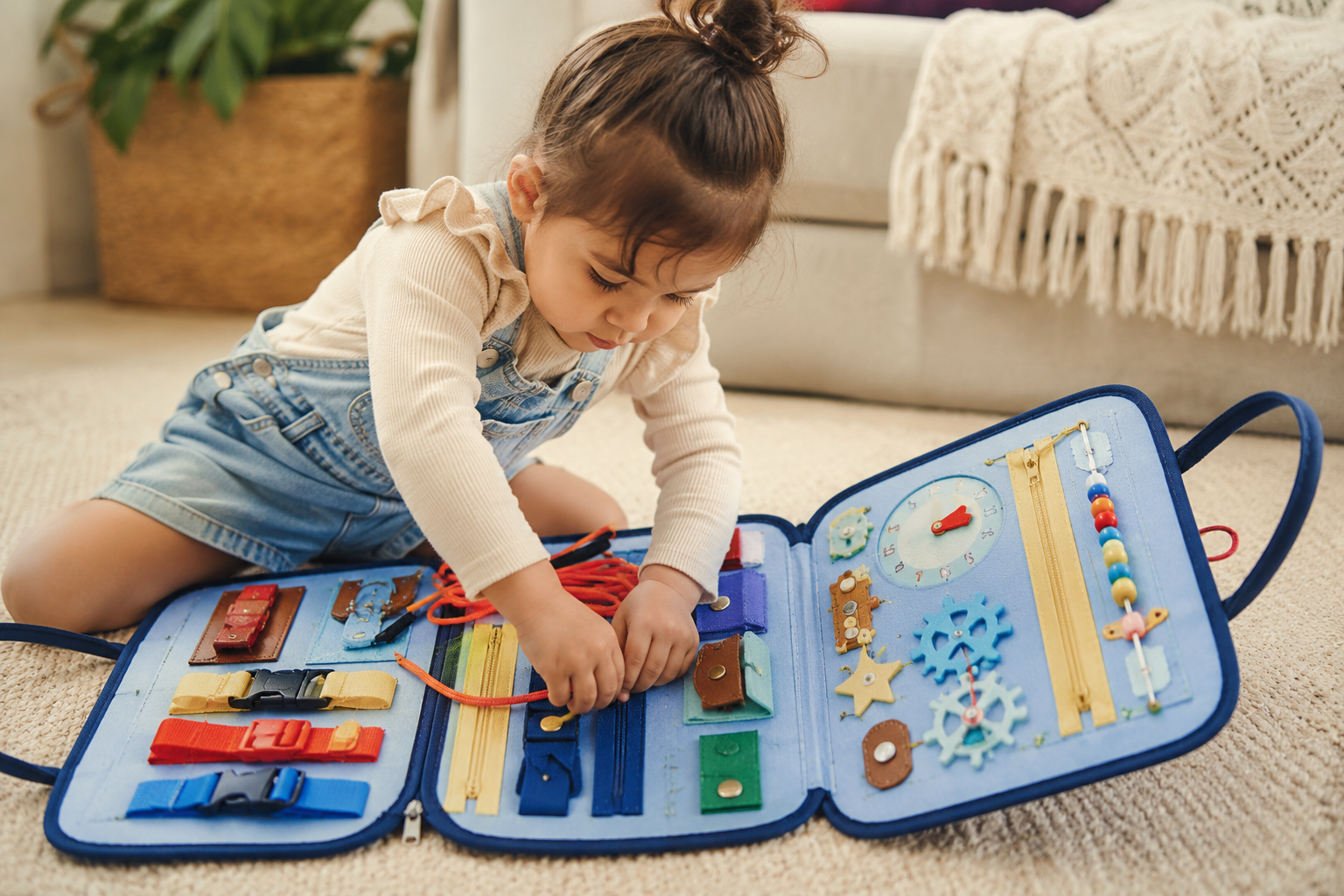
Busy boards are designed with interactive activities that encourage toddlers to use their hands in different ways. A child may pull a zipper, twist a gear, button a flap, lace a string, count beads, or explore different textures.
Each activity encourages a different type of movement. Some actions require pinching, some require pulling, some require turning, and others require focus and patience. Together, these simple activities give children a playful way to practice important developmental skills.
Unlike screen-based activities, busy boards invite children to actively participate. They are not just watching something happen. They are making something happen with their own hands.
Practicing Real-Life Movements
One of the biggest benefits of a busy board is that many of the activities are inspired by real life. Buckles, buttons, zippers, laces, and toggles are all things children may eventually use in daily routines.
When toddlers practice these movements through play, they begin to build familiarity with everyday tasks. They may not master everything right away, and that is okay. The process of trying, making mistakes, and trying again is part of learning.
Over time, these small activities can help support:
- Hand-eye coordination
- Finger strength
- Problem-solving
- Focus and patience
- Independent play
- Practical life skills
- Confidence with everyday tasks
Encouraging Patience and Problem-Solving
Busy boards are not only about movement. They also help toddlers practice thinking through small challenges.
A buckle may not open right away. A zipper might take a few tries. A lace may need careful attention. These moments teach children that it is okay to slow down, focus, and try again.
This kind of play can support problem-solving in a natural way. Instead of being told exactly what to do, children get to explore, test, repeat, and discover how each activity works.
A Screen-Free Way to Stay Engaged
Many parents want to reduce screen time but still need activities that keep toddlers engaged. Busy boards can be a helpful option because they offer stimulation without relying on phones or tablets.
A busy board gives children something colorful, interactive, and rewarding to explore. It can be used during quiet time, car rides, travel, restaurants, waiting rooms, or everyday play at home.
Because the activities are hands-on, children stay involved with the toy instead of passively watching a screen.
Learning at Their Own Pace
Every toddler develops at their own speed. Some children may quickly figure out a zipper, while others may enjoy simply touching, pulling, or exploring the textures first. Both are valuable.
Busy boards allow children to learn at their own pace. There is no pressure to get everything right. The goal is not perfection. The goal is exploration, practice, and confidence.
Final Thoughts
A busy board may look like a simple toy, but it can support many important parts of early development. Through buckles, buttons, zippers, laces, gears, and counting activities, toddlers can practice fine motor skills, hand-eye coordination, focus, and practical life skills.
For parents looking for a screen-free toy that feels fun, useful, and development-friendly, a busy board can be a meaningful addition to everyday play.